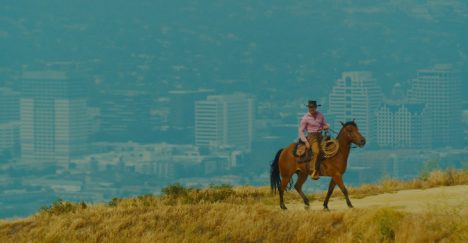
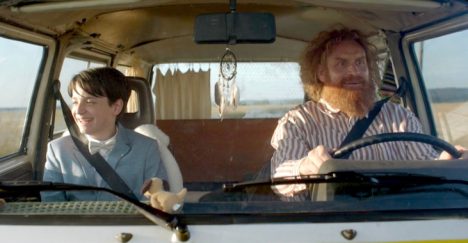




Det er bare én kvinnelig filmskaper i hovedkonkurransen i Venezia. I det offisielle programmet er det bare to italienske kvinnelige filmskapere. I et innlegg i La Repubblica retter filmorganisasjoner sterk kritikk mot festivalen.
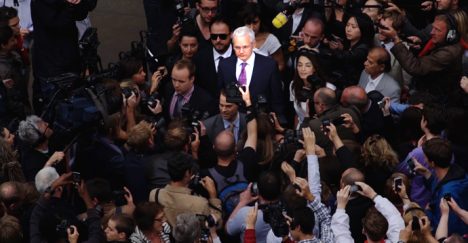

Det er bare én kvinnelig filmskaper i hovedkonkurransen i Venezia. I det offisielle programmet er det bare to italienske kvinnelige filmskapere. I et innlegg i La Repubblica retter filmorganisasjoner sterk kritikk mot festivalen.
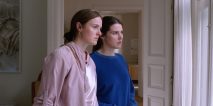
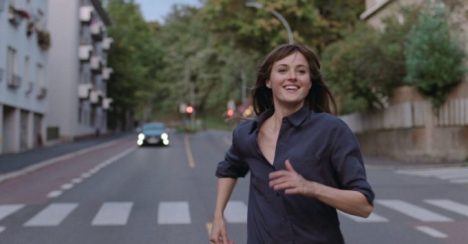
Foto: May el-Toukhy er eneste kvinne i hovedkonkurransen med «Woman Unknown».
Italienske og europeiske filmorganisasjoner kritiserer filmfestivalen i Venezia for mangelen på kvinnelige filmskapere i det offisielle programmet.
Det skjer gjennom et innlegg som er publisert i den ledende italienske avisen La Repubblica, og som er undertegnet av filmorganisasjonene 100autori og ANAC, regissørorganisasjonen Air3, dokumentarfilmorganisasjonen Doc/it og Women in Film Television & Media Italia, samt European Women’s Audiovisual Network (EWA).
Innlegget kommer få dager etter at årets program for filmfestivalen i Venezia ble offentliggjort. Av de 20 filmene i hovedkonkurransen er bare én regissert av en kvinne (Woman Unknown, regissert av danske May el-Toukhy).
Organisasjonene påpeker at sju mannlige regissører representerer italiensk film, både i og utenfor hovedkonkurransen, mens ingen italienske kvinnelige filmskapere er valgt ut. Videre understrekes det at bare to italienske kvinnelige filmskapere er representert i festivalens offisielle program.
Organisasjonene minner om at det er åtte år siden filmfestivalen i Venezia sluttet seg til de øvrige store filmfestivalene ved å undertegne 50/50-løftet om kjønnsbalanse. Gjennom dette forpliktet festivalen seg til å være åpen om sammensetningen av utvelgelseskomiteene, offentliggjøre statistikk over innsendte filmer og arbeide for bedre representasjon av kvinner.
Statement on the Presence of Women Directors at the 83rd Venice International Film Festival
“When will they ever learn” — Pete Seeger
Seven male directors represent Italian cinema in competition and out of competition at the Venice Film Festival, on the festival’s main stage. It is a one-dimensional selection: entirely male.
The hopes for a more balanced range of perspectives—one that better reflects the makeup of humanity—rest on the shoulders and in the eyes of Alina Marazzi and Anna Foglietta, both selected for the Horizons section, which is itself part of the official selection. We hold them in our thoughts with deep affection, together with the other women directors scattered across the programme, and with the hundreds of young women who enrol in film schools in every discipline, often surpassing their young male colleagues in numbers, talent, energy, urgency and creative power. Yet no admissions committee at these schools creates classes made up only of women; instead, they rightly seek a degree of human balance.
“But what about quality?” you may ask. Where does quality fit into all this?
Quality is not some divine, neutral or objective category floating above history. We know full well that it is a concept that shifts and evolves, and that art is a battlefield of bodies, tears, blood and power—not a heavenly realm where the sexless angels of quality drift about. Every selection is the result of a particular perspective, a particular culture, an imagination, preferences, sensibilities, limitations, mistakes and a clearly defined editorial vision. To believe that quality can be separated from all of this is to ignore how the cultural canon is constructed and where art itself comes from.
Precisely for this reason, the criteria by which we judge quality must themselves be continually questioned. When, year after year, the outcome is such a heavily unbalanced representation, we cannot simply conclude that women directors “are not good enough.” We must ask whether the tools through which we view cinema are still fit for the present day.
In 2018, the Venice Film Festival signed the 50/50 by 2020 pledge, committing itself to greater transparency in its selection process and to fairer representation of women and diversity in decision-making. Eight years have passed since that commitment, and six years since the target date we set ourselves—a recognition that cultural change does not happen spontaneously, but requires awareness and responsibility.
It is to that awareness and responsibility that we now appeal.
Because a world governed by a male perspective is frightening. And it is also troubling that this festival continues to look at the world through eyes that are almost exclusively male.
To Alina, Anna and the other women directors, we wish every success. And, of course, the same to all our male colleagues, because we know that cinema—not only Italian cinema—needs them. But when will they—the selectors, critics, producers and distributors—learn that they need us as well?
Signatories:
100autori – Association of Italian Filmmakers / ANAC – National Association of Filmmakers / AIR3 – Italian Directors Association / Doc/it – Italian Documentary Association / EWA – European Women’s Audiovisual Network / WIFTM – Women in Film Television & Media Italia